K-Rend goes green because airborne algae has settled and started growing on a wall that stays damp and shaded for long spells. It is a surface organism feeding on moisture and daylight, not a sign the render has failed. It cleans off with the correct soft, biocidal treatment — never a pressure washer — and comes back more slowly once you tackle the damp and shade that feed it. On a through-coloured render the fix is cleaning, not painting or coating.
- Green or black growth on K-Rend is living surface algae, not render failure — it’s cosmetic and treatable.
- It thrives on walls that stay damp and shaded: north-facing elevations, walls under trees, and surfaces near gutters, soil or open ground.
- Clean it with a soft, biocidal (fungicidal) wash applied gently — a pressure washer drives water into the finish and can do real harm.
- Don’t paint or coat the wall to hide it: K-Rend is through-coloured by design and painting starts an endless repaint cycle.
- Treating the cause — trimming shade, fixing leaks, clearing splashback — slows regrowth far more than cleaning alone.
- It is not dangerous and not your fault; most rendered homes need an occasional wash, the same way patios and roofs do.
Why is my K-Rend going green?
The green tinge spreading across your render is alive. It’s a thin film of algae — microscopic, plant-like organisms that drift through the air as spores and settle on almost any outdoor surface. Where they land on something that stays moist and gets a little daylight, they take hold and multiply, and within a couple of seasons a once-crisp wall can carry a noticeable green or grey-green bloom. The same organisms are why fences, patios, north-facing roofs and garden ornaments go green; render is simply another surface for them to colonise.
This matters because the instinctive reaction — that the render is “going off” or breaking down — is almost always wrong. The algae sits on the surface; it isn’t eating the render or pulling it apart. What the growth is really telling you is that that particular wall stays damp for long enough, often enough, for living things to settle on it. Understanding it as a moisture-and-shade story rather than a render-quality story is the key to dealing with it sensibly, and it’s the thread that runs through the rest of this guide.
Does green growth mean the render has failed?
In the vast majority of cases, no. Surface algae is a cosmetic issue, not a structural one, and it appears on cheap and premium renders alike — including correctly installed, top-of-the-range K-Rend systems. A wall can be perfectly sound, well bonded and doing its job while still wearing a green film, in exactly the way a healthy paving slab can go green without crumbling. So a bloom of algae on its own is not evidence that your installer cut corners or that the system is failing.
There is an important caveat. Algae feeds on damp, so heavy, persistent growth concentrated in one spot — rather than a general film across a shaded elevation — can occasionally be a clue that something is keeping that area wetter than it should be: an overflowing gutter, a cracked downpipe, a leaking sill or a defect letting water sit. In that situation the green is a symptom worth reading. We come back to spotting genuine problems later, but the headline holds: a general green film is normal surface algae; a stubborn wet patch in one place is worth investigating.
Why does one wall go green and another stays clean?
It’s one of the most telling clues, and homeowners notice it constantly: the front of the house looks immaculate while the side or rear elevation is turning green. The reason is simple — algae needs damp and shade, and some walls offer far more of both. North- and east-facing elevations get little direct sun, so they dry slowly and stay cooler and wetter for longer. South-facing walls bake dry within hours of rain, giving algae far less chance to establish.
Shade and shelter do the rest. A wall tucked under overhanging trees, beside a tall fence or in the lee of a neighbouring building stays damp and collects spores and organic debris that algae loves. So does a wall facing open fields, woodland or water, where the air carries more spores. Low-level greening near the ground is usually rain splashback — water bouncing soil and moisture back onto the render — while greening along the top of a wall often points to a gutter or roofline issue shedding water down the face. Reading where the green is tells you a great deal about why it’s there.
Green algae, black spots and red staining: what’s the difference?
Not all discolouration is the same organism, and telling them apart helps you respond correctly. Green is the classic algae film — soft, even and the most common by far. Black or very dark grey staining is often algae too, but can also be the early stages of lichen or a sootier airborne deposit; it tends to look more speckled or crusty than a smooth green wash. Red, pink or orange tints are usually a particular strain of airborne algae that’s more common near coasts and farmland, and looks alarming but behaves the same way.
Lichen — small, raised, crusty patches that look almost like miniature growths rather than a film — is a step up: it grips harder and is slower to clean, though it’s still surface-only on render. The practical point for a homeowner is reassuring: all of these are surface organisms that respond to the same gentle, biocidal cleaning approach. The colour tells you which neighbour has moved in, but not that you need a different strategy. The thing to rule out is anything that looks like it’s coming through the render from behind rather than sitting on top — which points to damp, not algae.
How colour and texture change how visible it is
Two identical walls can host the same amount of algae yet look completely different, and that comes down to the render itself. Because K-Rend is through-coloured — the pigment runs through the topcoat — the colour you chose is the colour you keep, with no paint layer to mask growth. On pale shades such as ivory, off-white and light cream, even a faint green film shows up clearly, which is why owners of pale renders notice algae earliest. Darker greys and warmer tones hide it for longer, though the growth is still there.
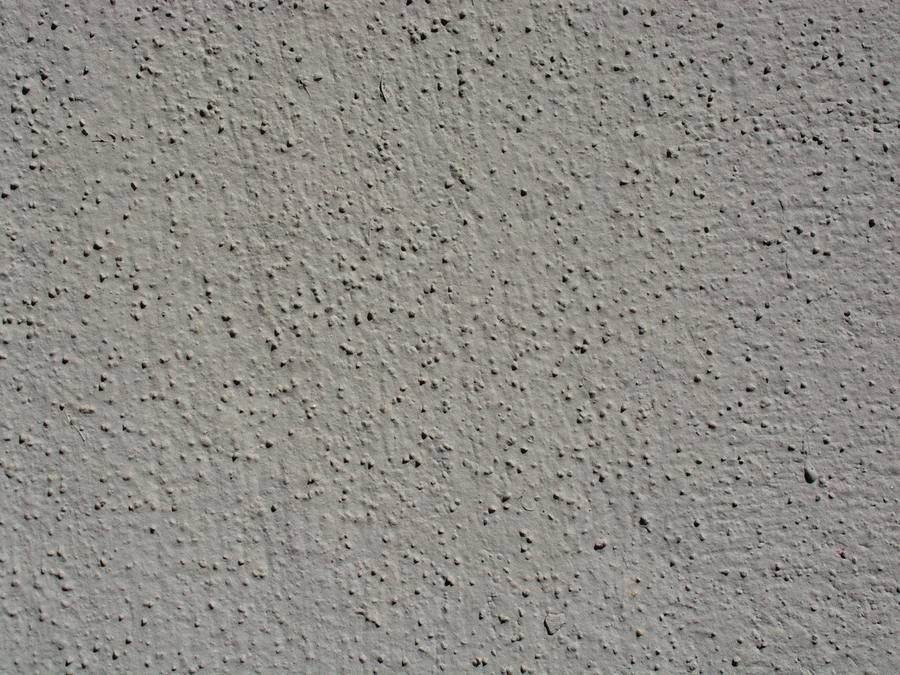
Texture matters just as much. A coarse dry-dash or roughcast finish has far more surface area and tiny sheltered pockets that hold moisture, so it tends to green up faster and is a little harder to clean than a smooth, scraped finish. None of this is a reason to choose a render purely to dodge algae — every exterior surface greens eventually — but it explains why your wall behaves the way it does, and why the same treatment can look more or less dramatic depending on the finish you have.
How to clean green off K-Rend safely
The right way to clean rendered walls is gentle and chemical, not forceful. The proven approach is a soft wash: a low-pressure application of a render-safe biocidal (fungicidal) treatment that kills the algae at the root so it stops growing, followed by a light rinse. Many of these treatments are designed to be left on to keep working, with the dead growth weathering away over the following weeks rather than being scrubbed off on the day. Done properly it lifts the green without touching the finish underneath.
For a small, reachable area at ground level, a careful homeowner can apply a proprietary render-safe algae treatment by hand or with a low-pressure sprayer, following the product instructions to the letter and protecting plants below. For anything above head height, a whole elevation, or growth that keeps returning, it’s a job for a specialist with the right access equipment and trade-grade biocides — both for safety and to avoid the costly mistakes covered next. Whichever route you take, the golden rule is patience: let the treatment do the work rather than attacking the wall.
Why a pressure washer is the wrong tool
It’s the single most common — and most damaging — mistake. A pressure washer makes the green vanish on the day, which feels like success, so it’s tempting. But high-pressure water on a thin-coat render does three bad things at once. It can erode or blast off the textured topcoat, leaving patchy, lighter scars that are far worse than the algae was. It forces water deep into the finish and any hairline gaps, where trapped moisture can lead to cracking, blowing or frost damage later. And because it only removes the visible film without killing the organism, the algae grows straight back, often faster, on a surface you’ve just roughened up for it.
There’s a commercial sting too: many render and manufacturer guarantees are voided by pressure washing, because it’s recognised as a cause of avoidable damage. So the tool that promises the quickest result is the one most likely to turn a free, cosmetic nuisance into a paid-for repair. If a cleaning contractor reaches for a high-pressure lance on your render, that’s your cue to stop them — the correct method is low pressure and the right chemistry, not brute force.
Should you paint or coat the render instead?
This question comes up a lot, and for K-Rend the answer is a clear no. The whole point of a through-coloured render is that the colour is built into the material and never needs a paint or coating on top. Painting over it throws that benefit away: you take a surface that was designed to be maintenance-light and commit yourself to a repainting cycle every handful of years, because paint films on render eventually flake, peel and trap moisture — which can actually make damp and growth problems worse, not better.
You’ll see products and firms that offer to seal, coat or paint a green wall to “cure” it. For a sound through-coloured render that has simply gone green, that’s solving a cleaning problem with a far bigger, costlier and longer-term commitment. The right response to surface algae is to clean it and address the damp and shade feeding it — not to bury a perfectly good finish under a coating. If a render is genuinely worn out or failed, the honest answer is re-rendering, not painting over the symptoms. Keeping a through-coloured wall paint-free is one of the main reasons people choose it in the first place.
Treating the cause, not just the symptom
Cleaning removes today’s green; fixing the conditions stops tomorrow’s. Algae needs persistent moisture, so the most effective long-term move is to keep that wall drier. Start with the obvious water sources: clear and repair gutters and downpipes so rain isn’t sheeting down the render, check that sills, flashings and weep holes are shedding water away from the wall, and make sure ground drainage isn’t leaving the base of the wall sodden. A single overflowing gutter can keep an elevation green no matter how often you clean it.
Next, tackle the shade and airflow. Cutting back overhanging branches, ivy, and shrubs pressed against the wall lets sunlight and breeze reach the surface so it dries faster between showers — algae struggles on a wall that dries quickly. Where greening is low down, reducing splashback by adding gravel, a French drain or simply keeping borders from piling soil against the render makes a real difference. None of this stops algae forever — nothing does in a damp climate — but together these steps can turn a wall that greens every year into one that needs attention every few.
How often will the green come back?
Honesty matters here, because no treatment makes render immune. In the UK’s damp, mild climate, some regrowth is inevitable — the question is how fast. A wall in a favourable spot, cleaned properly and kept dry, might stay looking good for several years between treatments. A north-facing wall under trees, near fields or close to water can start to show again within a year or two even after a thorough clean, simply because the conditions strongly favour algae.
A good rule of thumb is to think of it like cleaning the gutters or the patio: an occasional, planned maintenance task rather than an emergency. Many owners settle into a rhythm of a proper biocidal soft wash every two to four years, with a quick visual check each spring. Catching a light film early makes each clean easier and cheaper than waiting until the growth is heavy and established. If a wall is greening up much faster than that despite the right care, it’s usually a sign there’s an unresolved damp source still feeding it — worth a closer look rather than just cleaning more often.
Reducing the chance it returns
Prevention is really the same toolkit as treating the cause, applied as habit rather than reaction. The most reliable measures are the dull, practical ones: keep gutters and downpipes clear and leak-free, keep vegetation trimmed back off the walls, and make sure water drains away from the base rather than pooling against it. A wall that dries quickly after rain is a wall algae finds hard to live on, and most prevention boils down to helping the surface dry.
Some biocidal treatments leave a residual protective effect that slows the next colonisation, and a light maintenance wash before growth becomes obvious is far easier than a heavy clean afterwards. What we’d steer you away from is the idea that you need to seal, paint or coat the wall to keep it clean — on a through-coloured render that’s an expensive overreaction to a manageable maintenance task. Sensible water management plus an occasional proper wash keeps a K-Rend wall looking smart for the long run without changing the finish you chose.
When to bring in a professional
Plenty of light, ground-level greening can be handled by a careful homeowner with the right render-safe product. It’s worth calling in a specialist when the practicalities or the diagnosis get harder. Height and access are the obvious triggers — anything needing ladders, towers or a scaffold is safer in trained hands — as is a whole-house clean, where consistent, streak-free results across large elevations take the right equipment and trade-grade treatments.
The other trigger is when the green keeps winning. Persistent regrowth, growth concentrated in one wet patch, or any sign of damp showing through from behind the render should be looked at properly rather than just re-cleaned, because that’s where surface algae stops being the real story. A good specialist will treat the growth and tell you honestly whether there’s an underlying water source — a failed gutter, a defect, a damp issue — that needs fixing first. That diagnostic eye is often worth more than the clean itself.
Green render when buying or selling a home
Because algae looks worse than it is, green render can rattle buyers and sometimes surfaces in survey reports. It’s worth keeping in proportion: a surveyor flagging surface algae is noting a cosmetic maintenance item, not a structural defect, and a straightforward biocidal clean usually resolves it. If you’re selling, a wash before marketing is one of the cheapest ways to lift kerb appeal; if you’re buying, heavy greening is rarely a dealbreaker, though it’s reasonable to ask whether it’s simply weathering or a clue to a gutter or damp issue.
The one thing to check, on any rendered home, is that the green really is surface growth and not a mask for something behind it. A genuinely failed or damp-affected wall is a different and more serious matter than algae, and the two can look similar from the pavement. When in doubt, a specialist’s assessment settles it quickly — and if your home is sound and simply weathered, you can buy or sell with the reassurance that a clean wall is a wash, not a rebuild, away.
Frequently asked questions
Why is my K-Rend going green?
Is green algae damaging my render?
Can I pressure wash K-Rend to remove the green?
What is the best way to clean green off K-Rend?
Should I paint or coat my K-Rend to stop it going green?
Why does only one wall go green and the others stay clean?
How often will the green come back after cleaning?
Does K-Rend going green mean it was installed badly?
Will the green algae go away on its own?
Is the green on my render dangerous to my health?
Can I prevent K-Rend from going green altogether?
Get a free render clean or quote
Tell us about your property and SmartMatch™ pairs you with one vetted local render specialist — for a free, no-obligation quote, whether you need cleaning, repair or a fresh finish. No directory roulette, no pressure.
Get a free quote →