Clean K-Rend with a low-pressure soft wash and a render-safe biocidal (fungicidal) treatment — never a pressure washer. The biocide kills the algae at the root so it stops regrowing, and the dead growth weathers away over the following weeks. Small, reachable areas can be a careful DIY job with a proprietary product; whole walls or anything at height are safer with a specialist. Cleaning plus fixing the damp and shade that feed the growth keeps it cleaner for longer.
- Use a low-pressure soft wash with a render-safe biocidal treatment — it kills algae at the root, so it stops regrowing.
- Never use a pressure washer: it can strip the textured finish, drive water in, and void guarantees.
- Let the treatment do the work — patience beats scrubbing, and dead growth weathers off over weeks.
- Small ground-level areas can be DIY with the right product; whole walls or height are a specialist job.
- Protect plants, wear gloves and eye protection, and follow the product instructions exactly.
- Cleaning plus reducing damp and shade keeps the wall cleaner for far longer than cleaning alone.
Why how you clean K-Rend matters so much
K-Rend is a thin, textured, through-coloured finish, and that texture is exactly what makes the wrong cleaning method so damaging. Get it right and the wall comes up looking close to new with no harm done; get it wrong and you can permanently scar the finish, leaving patches that are lighter, rougher or thinner than the surrounding render — a problem far more expensive and obvious than the algae you started with. So before reaching for any tool, the single most useful thing is to understand that cleaning render is a gentle, chemical job, not a forceful, mechanical one.
The green or grey film you’re trying to remove is living surface algae, which is why the method that works is one that kills it rather than one that blasts it off. Scrubbing or jetting away the visible growth without killing it just clears the surface temporarily — it returns, often faster, on a finish you may have damaged in the process. The right approach treats the cause of the colour, not just the colour itself. If you want the background on why render goes green in the first place, our guide on why K-Rend goes green covers it.
The safe method: a soft wash
The proven, render-safe way to clean K-Rend is a soft wash: applying a render-safe biocidal (fungicidal) treatment at low pressure, letting it kill the growth, and rinsing gently. The biocide does the real work — it kills the algae, lichen or mould down to the root so it can’t simply regrow. Many of these treatments are designed to be left on the surface to keep working, with the dead growth then weathering away naturally over the following days and weeks rather than needing to be scrubbed off on the day.
That “leave it to work” principle is the part homeowners find hardest, because nothing dramatic happens immediately. But patience is exactly what protects the finish: there’s no need to attack the wall, because the chemistry is doing the job. A light rinse with low-pressure water — an ordinary garden hose, not a high-pressure lance — is all the physical effort the surface should ever see. Done this way, the texture and through-colour are left completely intact while the growth dies off and disappears.
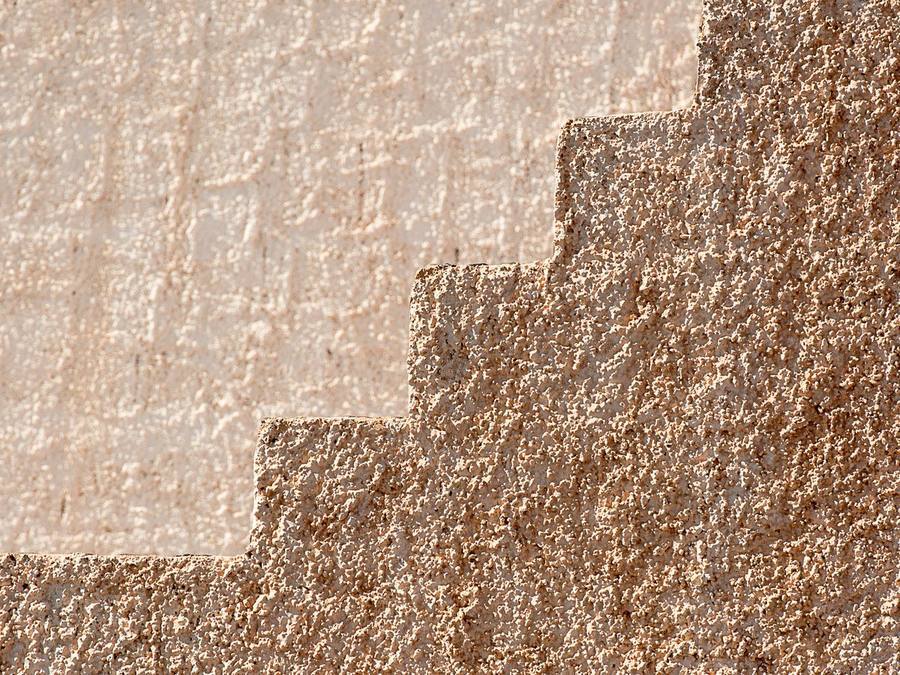
What you’ll need
For a small, reachable area, the kit is simple. You’ll want a proprietary render-safe biocidal cleaner (sold for exactly this purpose — check it’s suitable for through-coloured render), a low-pressure applicator such as a pump or knapsack sprayer or a soft brush, and a garden hose for gentle rinsing. For safety you’ll need gloves, eye protection and old clothes, and something to protect plants and surfaces below the area you’re treating.
What you very deliberately do not want is a pressure washer, a stiff wire brush, or harsh household chemicals like neat bleach used at random — all of which can damage the finish or harm planting and run-off. Stick to a product made for render and the gentle tools above. If the job is bigger than a hose and a sprayer can comfortably reach, that’s your signal it’s a specialist’s job rather than a kit-and-ladder afternoon, for reasons we come to shortly.
The safe method, step by step
For a suitable small area, the process runs roughly like this. First, prepare: pick a dry, still, mild day (not in strong sun, frost or rain), and cover or wet down plants and surfaces below. Second, apply the biocidal treatment evenly to the affected render at low pressure, following the product’s dilution and coverage instructions to the letter — more is not better. Third, leave it to work for the time the product specifies; with many treatments that means leaving it on rather than rinsing straight away.
Fourth, rinse only if directed — some products want a gentle low-pressure rinse, others are left entirely to weather. Fifth, be patient: over the following days and weeks the dead growth fades and washes away with normal rain. If a stubborn area remains, a second light application is far safer than escalating to force. The whole philosophy is gentle and chemical: you are treating a living film, not removing paint, so let the treatment, not muscle, do the work. Always defer to the specific product’s instructions over any general guide.
Why you must never pressure wash it
This deserves its own warning because it’s the most common and most expensive mistake. A pressure washer makes the green vanish instantly, which feels like success, so the temptation is strong. But on a thin-coat render the high-pressure jet does three damaging things at once: it can erode or blast off the textured topcoat, leaving lighter, smoother scars; it forces water deep into the finish and any tiny gaps, where trapped moisture can later cause cracking, blowing or frost damage; and it only removes the visible film without killing the organism, so the algae returns quickly on a surface you’ve just roughened up for it.
There’s a financial sting too: pressure washing is widely recognised as a cause of avoidable damage and can void render and manufacturer guarantees. So the tool that promises the quickest result is the one most likely to turn a free, cosmetic clean into a paid-for repair. If a cleaning contractor reaches for a high-pressure lance on your render, stop them — the correct method is low pressure and the right chemistry, never brute force. No exceptions.
Don’t ‘clean’ it by painting or coating
One more thing to steer clear of, because it gets marketed as a cleaning fix: painting or coating the wall to cover the growth. K-Rend is through-coloured by design and never needs a paint or coating on top — that’s one of its main benefits. Painting over a green wall doesn’t clean it; it buries a maintenance task under a far bigger, costlier commitment, because paint films on render eventually flake, peel and can trap moisture, often making damp and growth problems worse rather than better.
The right response to a green or dirty K-Rend wall is to clean it and address the damp and shade feeding the growth — not to coat over the symptoms. If a render is genuinely worn out or failed, the honest answer is re-rendering, not painting. Keeping a through-coloured wall paint-free is exactly why people choose it, so don’t let a green film talk you into undoing that. A proper clean restores the finish you already have.
DIY or call a specialist?
So when is cleaning K-Rend a sensible DIY job, and when isn’t it? The honest line is about reach and scale. A small patch of low-level greening you can comfortably reach from the ground, with a proprietary render-safe product and a careful approach, is well within a confident homeowner’s ability. The risk there is low and the kit is cheap.
It becomes a specialist job the moment you need ladders, a tower or a scaffold, or when you’re cleaning a whole elevation or house. Working at height is genuinely dangerous, trade-grade treatments and equipment give a more even, longer-lasting result across large areas, and a professional won’t make the pressure-washer mistake. There’s also a diagnostic benefit: a good specialist will spot if the greening is being driven by an underlying problem rather than just shade. If in doubt, the height question usually settles it — if you’d be up a ladder, get a professional.
Cleaning lasts longer if you treat the cause
Cleaning removes today’s growth; reducing the conditions that feed it is what makes the clean last. Algae needs persistent moisture, so the most effective follow-up is to keep that wall drier. Clear and repair gutters and downpipes so rain isn’t running down the render, check that sills and flashings shed water away from the wall, and make sure ground drainage isn’t leaving the base sodden. A single overflowing gutter can keep a wall greening up no matter how often you treat it.
Then tackle shade and airflow: cut back overhanging branches and shrubs pressed against the wall so sunlight and breeze can dry it faster, and reduce splashback at low level. None of this stops algae forever in the UK climate, but together these steps can turn a wall that needs cleaning every year into one that needs it every few. Our guide on why K-Rend goes green goes deeper into the causes worth tackling.
How often should you clean K-Rend?
There’s no fixed schedule because it depends entirely on the wall. A south-facing, well-drained elevation that dries quickly might go many years looking fine, while a north-facing wall under trees can need attention every couple of years even after a thorough clean. The honest way to think about it is as an occasional, planned maintenance task — like clearing gutters or cleaning the patio — rather than an emergency.
A practical rhythm many owners settle into is a proper biocidal soft wash every two to four years, with a quick visual check each spring. Catching a light film early makes each clean quicker, cheaper and gentler than waiting until growth is heavy and established. If a wall is greening up much faster than that despite good care, it’s usually a sign of an unresolved damp source feeding it — worth investigating rather than simply cleaning more often.
Dealing with stubborn or heavy growth
Sometimes the growth is heavy, well-established, or includes crustier lichen rather than a soft algae film, and it doesn’t all lift on the first treatment. The temptation at this point is to escalate the force — which is exactly the wrong instinct. The right response is to repeat the gentle approach: a second (and if needed third) application of the biocidal treatment, giving each time to work, will deal with most stubborn growth without any of the risk of mechanical methods.
If growth keeps returning quickly despite repeated treatment, that’s telling you something the cleaning alone can’t fix: the wall is staying too wet, usually from a gutter, leak or drainage issue, or it’s heavily shaded. At that point the answer is to fix the moisture source and reduce the shade, not to clean ever more aggressively. Persistent, localised heavy growth in one spot is also worth a closer look, in case it’s masking a damp problem behind the render rather than simply sitting on it.
Staying safe
Two safety strands matter here: the chemicals and the height. On chemicals, biocidal treatments are designed to kill living growth, so treat them with respect — wear gloves and eye protection, avoid breathing in spray, keep children and pets away while you work and until surfaces are dry, and protect or rinse planting below since run-off can harm plants and wildlife. Always follow the product’s own safety instructions, which take precedence over any general advice.
On height, this is where most homeowner cleaning goes wrong. Working off ladders with a sprayer and wet, slippery surfaces is genuinely hazardous, and it’s simply not worth the risk for a cosmetic job. If the growth is above what you can safely and comfortably reach from the ground, that’s the clearest possible signal to hand it to a specialist with proper access equipment. No clean is worth a fall.
When cleaning isn’t the answer
Cleaning is the right answer for surface growth and general grime on a sound render. But it’s worth knowing the cases where it isn’t the fix. If the render is cracked, blown, hollow-sounding or visibly failing, no amount of cleaning addresses that — that’s a repair question, covered in our guide to K-Rend cracking and repairs. If discolouration appears to be coming through the render from behind rather than sitting on top, that points to damp rather than algae, and needs a different diagnosis.
And if a finish is genuinely worn out at the end of its life, the honest route is re-rendering, not endlessly cleaning or — as covered above — painting over it. A good specialist will tell you plainly whether you’re looking at a clean, a repair or a re-render, which saves you spending money in the wrong place. For most homeowners with a green or grubby but sound wall, though, a proper soft wash is all that’s needed to bring it back.
The bottom line on cleaning K-Rend
Cleaning K-Rend safely comes down to a few simple rules: use a render-safe biocidal soft wash, let the chemistry kill the growth, rinse gently if at all, and be patient while the dead growth weathers away. Never use a pressure washer, never try to paint or coat the problem away, and don’t work at height yourself. Tackle the damp and shade feeding the growth and the clean lasts far longer.
Done this way, cleaning is a low-cost, low-drama bit of maintenance that keeps a smart wall looking its best for decades — the gentle counterpart to the durable finish you paid for. For small, reachable patches it’s a fine DIY job; for whole walls or anything off the ground, a specialist clean is safer, more even and longer-lasting. Either way, the wall comes back — no force, no coatings, no fuss.
Frequently asked questions
How do you clean K-Rend safely?
Can I pressure wash K-Rend?
What should I use to clean K-Rend?
Will the green come off straight away?
Can I clean K-Rend myself?
Should I paint or seal K-Rend to keep it clean?
How often should K-Rend be cleaned?
Is the cleaning chemical safe for my plants?
Why does the green keep coming back after I clean it?
Can cleaning fix cracked or failing K-Rend?
Is it safe to clean K-Rend at height myself?
Get a free render clean or quote
Tell us about your property and SmartMatch™ pairs you with one vetted local render specialist — for a free, no-obligation quote, whether you need a safe professional clean, a repair or a fresh finish. No directory roulette, no pressure.
Get a free quote →