K-Rend is through-coloured — the pigment runs through the topcoat, so it never needs repainting and holds its colour for years. The most popular UK shades are off-whites and greys, with warmer creams for traditional homes. Your choice is effectively permanent until you re-render, so view large samples on the actual wall, in daylight, before committing.
- K-Rend is through-coloured — the colour runs through the topcoat, so there’s no painting and nothing to flake.
- Off-whites and greys are the most-chosen shades on modern UK homes; warm creams suit older properties.
- Your choice is near-permanent until re-rendering, so always sample it on the actual wall.
- North-facing and shaded walls read cooler, and show algae sooner on very pale or very dark shades.
- Through-colour holds well — what looks like ‘fading’ is usually surface algae or dirt, which cleans off.
- Colour rarely changes the price; the finish and the wall do.
How K-Rend colour works
The defining feature of K-Rend colour is that it’s through-coloured: the pigment is blended all the way through the topcoat before it’s applied, so the colour is the surface rather than a layer of paint sitting on top. That’s why a K-Rend finish never needs repainting and why it can’t flake or peel the way a painted wall does — there’s nothing on top to come away. The trade-off is that the colour is chosen once, at the point of rendering, and is effectively fixed until the wall is re-rendered. That permanence is exactly why it’s worth taking time over the decision.
Most installers work from a standard palette of popular shades, but many ranges also allow a bespoke colour match to a specific reference. A standard colour is usually quicker and cheaper to source; a bespoke match may carry a small premium and a slightly longer lead time. Your specialist will tell you which shades are stock and which need ordering. For how colour fits into the wider system, the K-Rend explained guide covers the full build-up.
The most popular K-Rend colours
Tastes vary by region and property age, but UK homeowner choices cluster into a few clear families. Exact names differ between ranges, so treat these as the broad groups rather than fixed product codes.
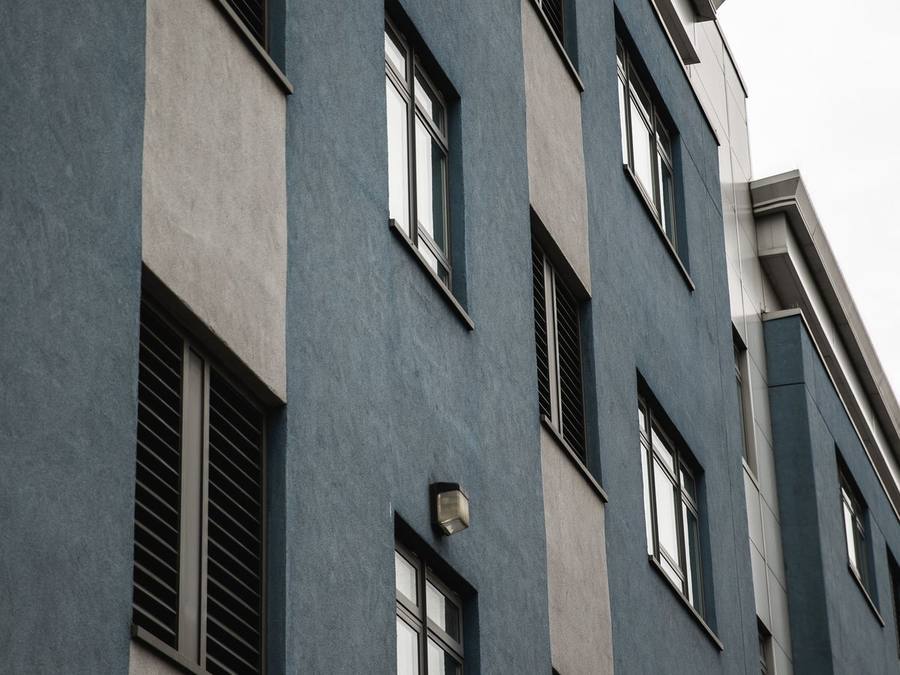
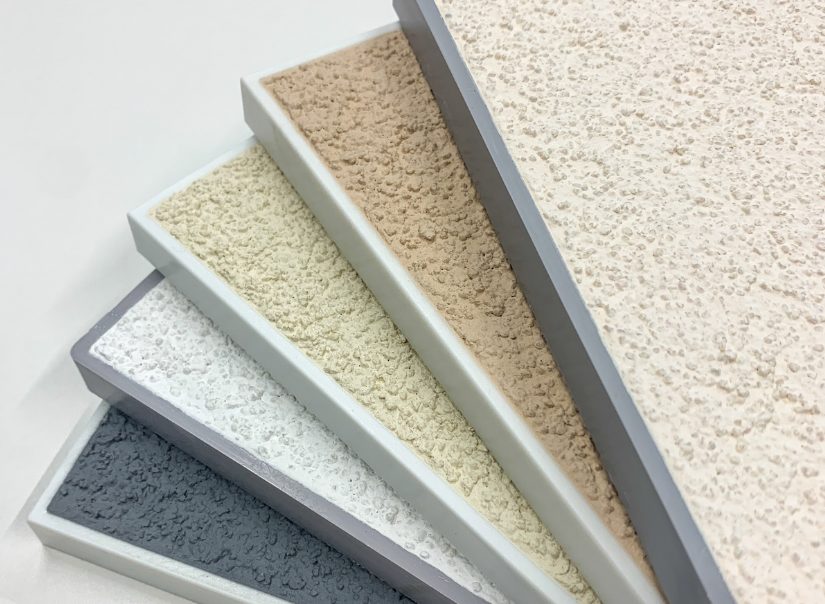
Whites and off-whites remain the classic choice — crisp, bright and timeless, they suit contemporary and traditional homes alike and make a property feel clean and well-kept. Greys, from pale silver-greys through to deep anthracite, have dominated new-build and renovation choices for the last decade; they read as modern and pair beautifully with anthracite windows and dark roofs. Warm creams and sand tones flatter older and rural properties, sitting comfortably alongside brick, stone and timber. Bolder colours — deeper earths, greens or blues — appear occasionally, usually on a feature elevation or in coastal and characterful settings rather than across a whole house.
Within each family there’s real range. Among whites, a bright, true white feels contemporary and architectural, while a softer chalk or oyster white reads warmer and more forgiving of weathering. The grey family spans the widest: pale dove and silver greys keep a home feeling light and airy, mid greys give a confident modern look, and deep charcoals and anthracites make a bold statement that works best with plenty of glazing and contrasting detail. Creams and sands run from barely-there off-whites through to richer buff and biscuit tones that suit cottages and country settings. The single most useful habit is to ignore the marketing names and judge the actual sample, because one manufacturer’s ‘ivory’ can be another’s ‘magnolia’.
Grey vs white vs warm tones: which suits your home
The right family usually follows the style and surroundings of the property. Modern and new-build homes tend to carry grey and white well, especially where windows, fascias and the roof are already in cool, contemporary tones. Period and rural homes often look more natural in warm creams and sands that echo traditional lime-washed renders. Look hard at the fixed elements you won’t be changing — brick plinths, stone surrounds, the roof colour, neighbouring houses — because the render has to live alongside all of them. A shade that looks great on a sample card can clash badly with a warm red-brick or a particular roof tile. Our wider guides on grey render houses and white render houses show each family on real homes.
Choosing a colour that suits your street
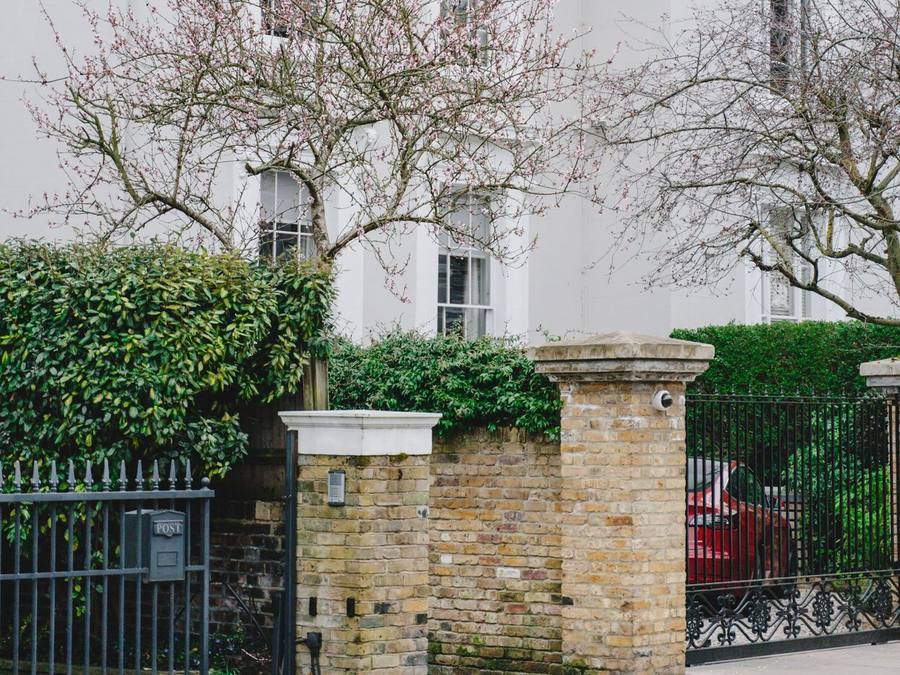
It’s easy to fall for a colour in isolation and forget the wall will be seen in context. A shade that stands out tastefully can lift a whole frontage; one that fights its neighbours can date a house quickly. If you live in a conservation area or a listed property, there may be restrictions on colour and even on whether a modern render is permitted at all, so check before you commit. For most homeowners the safe, resale-friendly path is a broadly neutral shade — an off-white, a soft grey or a warm cream — that flatters the house without shouting. Our roundup of the best render colours for UK homes is a good place to gather ideas before you narrow down.
Coordinating render colour with windows, roof and doors
A render colour is never seen on its own — it’s framed by everything else on the elevation, and the most successful schemes are the ones chosen as a whole rather than in isolation. The roof is the largest fixed element and sets the overall temperature of the house: a cool grey-blue roof flatters greys and crisp whites, while a warm red or brown tile sits more happily with creams and sand tones. Windows and fascias are the next big influence; the popularity of anthracite-grey window frames is a large part of why grey render has boomed, because the two read as a deliberate, modern pairing.
Front doors, garage doors and rainwater goods are your chance to add a considered accent — a deep blue or botanical green door against an off-white wall, say. The trick is restraint: pick the render and roof relationship first, let the windows follow, and treat the door as the one place to introduce personality. Holding paint or sample chips of all these elements together, outdoors, tells you far more than judging the render shade alone.
Light, aspect and how a colour really looks
The same colour can look like two different shades on two walls of the same house, and this catches people out. A south-facing elevation in bright sun reads lighter and warmer; a north-facing or shaded wall reads cooler, greyer and a touch darker. Texture plays its part too — a scraped finish scatters light differently from a dry-dash one, subtly changing how the colour appears. The practical answer is always the same: get the largest samples you can, fix them to the actual wall, and look at them at different times of day and in both sun and cloud before you decide. A tiny chip held at arm’s length in a showroom tells you very little.
Render colour trends — and choosing something that lasts
It’s worth separating what’s fashionable now from what you’ll still be happy with in fifteen years, because a render colour outlives most decorating trends by a wide margin. The defining shift of the last decade has been the move from cream and magnolia towards cool greys and crisp whites, driven by contemporary new-builds and the rise of dark window frames. More recently, softer warm greys, putty and stone tones have gained ground as a gentler alternative that hides weathering well.
None of that means you must follow the crowd, but it pays to be honest about why you’re drawn to a colour. A broadly neutral shade — an off-white, a soft or mid grey, a warm stone — tends to age gracefully and appeal to the widest range of future buyers, which matters given the colour is fixed until you re-render. A bolder choice can be wonderful on the right house, but it’s a more personal bet. If resale is a consideration, lean towards the timeless end and save the boldness for the front door.
One colour or two? Feature elevations and detailing
Most homes are rendered in a single colour, and there’s real elegance in that simplicity. But a two-colour scheme can add character where the architecture invites it — a contrasting band at ground-floor level, a darker feature gable, or a recessed entrance picked out in a deeper tone. Because each colour is through-coloured and applied separately, a multi-colour scheme adds a little to the labour and needs planning into the specification from the outset rather than added as an afterthought.
The pitfall to avoid is over-complication: too many tones, or contrasts that fight the roof and windows, can make a house look busy and date quickly. If you’re tempted by two colours, keep the palette tight and tonal — two shades from the same family usually look more considered than a hard contrast — and ask your specialist to show you how the break lines will fall against the building’s features before committing.
Do K-Rend colours fade?
This is one of the most common worries, and the reassuring answer is that genuine fading is rare. Because the colour runs through the topcoat and the pigments are designed to be UV-stable, a K-Rend finish holds its colour well over its 20–30 year life. What homeowners usually interpret as fading is almost always surface algae or general grime dulling the finish — particularly on cool, shaded or north-facing walls — rather than the colour itself breaking down. The good news is that this is cosmetic and reversible: the correct cleaning treatment restores the original shade. Our guides on why K-Rend goes green and how to clean K-Rend safely cover this in detail. Very deep or intense colours can show weathering a little more readily than mid-tones, which is one more reason most homeowners settle on softer shades.
How colour affects maintenance
Colour choice has a quiet influence on how a wall ages in the eye. Very pale shades look immaculate when clean but show algae, splashes and dirt in higher contrast, so they may want washing a little more often. Very dark shades look striking but can show salts, water runs and dust more visibly, and read hotter in direct sun. Mid-tones — soft greys, warm creams, stone shades — tend to be the most forgiving, disguising the day-to-day marks that any exterior wall picks up. None of this should rule out a colour you love; it’s simply worth knowing how each behaves so there are no surprises a couple of winters in.
Does colour affect the price or lead time?
For the most part, colour is a free choice. Picking a standard palette shade rarely changes the cost or the timeline at all. A bespoke colour match to a specific reference may carry a small materials premium and need ordering in, which can add a little lead time, so mention any non-standard colour early so it can be sourced before work begins. What actually drives the price is the things we cover in the K-Rend cost guide — the wall’s condition, access and the finish — not the shade you choose.
How to judge a colour sample properly
Most colour regret traces back to deciding from something too small, in the wrong place. A postage-stamp chip under showroom lighting is close to useless; colour reads completely differently at scale and in natural light. Wherever you can, get a large sample board — or better, the shade applied to a test area — and live with it for a few days. View it on the actual elevation it’ll be used on, since a north wall and a south wall will show the same render as two different colours. Look in bright sun, flat cloud and the low light of evening, because a shade you love at noon can turn cold and flat by dusk.
It also helps to see the colour on a finished house nearby at full scale — a good installer can usually point you to completed jobs. And always check the sample against your fixed elements: hold it up to the brick plinth, the roof and the window frames rather than against a white wall indoors. Taking a week over this stage costs nothing and removes almost all the risk from a decision you’ll live with for decades.
Getting the colour right: practical steps
A simple routine prevents nearly all colour regret. Gather a shortlist from a current colour range rather than old photos. Order physical samples and, where possible, ask to see the shade on a finished house nearby. View them on your own wall, in daylight, against your brick, roof and windows, at different times of day. Once you’ve decided, get the exact colour written into the specification and quote so there’s no ambiguity on the day. And because the colour is effectively permanent, resist deciding under time pressure — a good specialist will happily wait a few days for you to be sure. If you’d like that specialist found for you, SmartMatch™ pairs you with one vetted local renderer for a free, no-obligation survey.
Frequently asked questions
Does K-Rend come in different colours?
What are the most popular K-Rend colours?
Does K-Rend need painting?
Do K-Rend colours fade?
Can you get K-Rend in grey or anthracite?
Can K-Rend be colour-matched to a specific shade?
Does the colour affect the cost of K-Rend?
Why does my K-Rend look a different colour in different light?
Can you change the colour of K-Rend later?
What render colour goes best with anthracite windows?
Should I choose a trendy colour or a neutral one?
Get a free K-Rend quote
Settled on a shade? SmartMatch™ pairs you with one vetted local render specialist for a free, no-obligation quote and survey — so you can see your colour on the wall before you commit.
Get a free quote →