K-Rend Pewter Grey is a refined mid-to-warm grey, and Sterling White is a clean white — and they’re a classic pairing. Used together, a Pewter Grey body with Sterling White detailing (or vice versa) gives the crisp two-tone, grey-and-white look that suits modern homes and renovations. Both are through-coloured, so neither needs painting. The grey hides everyday grime well; the white lifts and contrasts. It’s a versatile, contemporary, low-risk combination.
- Pewter Grey is a refined mid-to-warm grey; Sterling White is a clean white.
- Used together they create the crisp two-tone grey-and-white modern look.
- Pewter Grey hides everyday grime well; the white detailing lifts and contrasts.
- Both are through-coloured, so neither needs repainting.
Why Pewter Grey and Sterling White go together
These two shades earn a guide of their own because they’re so often chosen as a pair. Pewter Grey is a refined, mid-to-warm grey — not a cold steel grey, but a softer, liveable tone that suits a whole house. Sterling White is a clean, bright-leaning white. Put a grey body together with white detailing — or set white feature areas against a grey main wall — and you get the crisp, contemporary two-tone look that defines a huge number of modern UK homes and renovations.
The combination works because the two shades do different jobs: the grey grounds the house and hides everyday grime, while the white lifts, contrasts and draws the eye to the detailing. It’s a versatile, low-risk pairing that reads modern without being stark, which is exactly why it’s become a default for homeowners wanting a current, smart finish.
Pewter Grey on its own
Used on its own, Pewter Grey is one of the most flattering greys in the range. It’s warm enough to avoid the coldness of a steel grey, yet contemporary enough to feel current, which makes it suit both modern and more traditional homes. As a mid-tone, it has a real practical advantage too: it hides everyday dirt and the early stages of algae far better than a pale shade, so it stays looking clean for longer between washes.
That combination of good looks and forgiving upkeep is why mid-greys like Pewter are such a popular, safe choice. If you want a single-colour scheme rather than two-tone, Pewter Grey stands perfectly well alone — the two-tone pairing simply adds the white as a lift. For the wider grey family, see our dedicated K-Rend grey guide.
Sterling White as the lift
Sterling White is the bright counterpart in the pairing — a clean white used to lift and contrast against the grey. In a two-tone scheme it typically appears on detailing, feature panels, gables or render bands, drawing the eye and adding crispness to what would otherwise be an all-grey elevation. It can equally be the main colour with grey as the accent, depending on the look you want.
As a white, it shares the trait of showing grime a little sooner than the grey, so where it’s used matters — white detailing on a sheltered, visible area stays crisp, while a large white expanse on a shaded wall will want cleaning more often. Used as an accent against the grey, though, the upkeep is rarely an issue, and the contrast is what makes the scheme work.
The homes the pairing suits
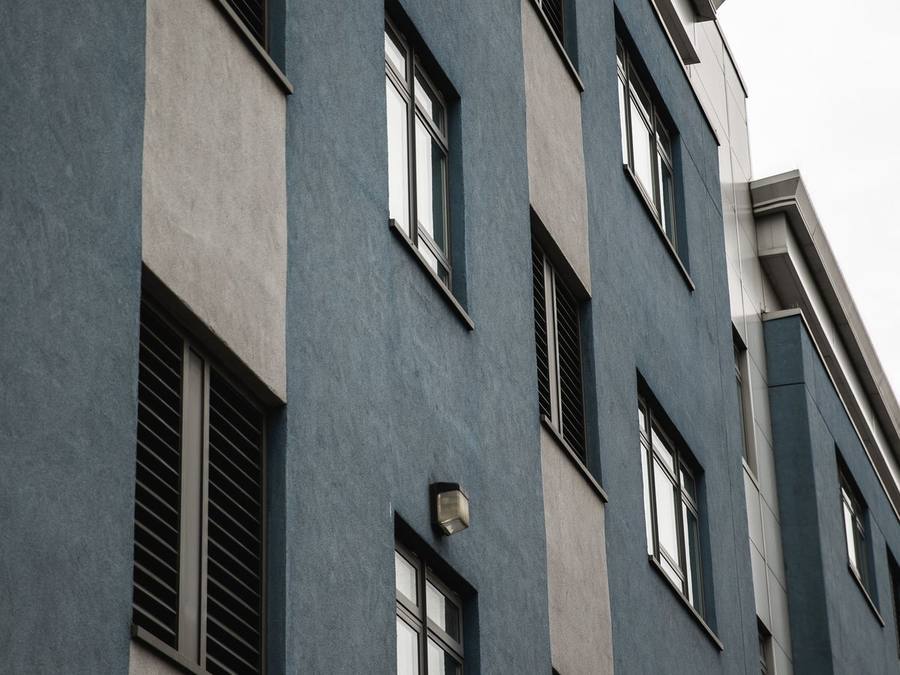
The Pewter Grey and Sterling White combination is at its best on modern homes and contemporary renovations — new builds, extensions, and houses being brought up to date with a current palette. The two-tone treatment particularly suits homes with distinct features to pick out: gables, projecting bays, render bands or feature walls that the contrast can emphasise.
It’s a versatile, broadly safe choice that sits comfortably on most streets without being either bland or stark. As with any scheme, it’s worth considering your home’s architecture and how the two-tone effect will fall on your specific elevations — a good installer can help you decide where the grey and white should sit. Our main colours guide covers how to plan a scheme for your home.
Both colours are permanent
As with every K-Rend shade, both Pewter Grey and Sterling White are through-coloured — the colour runs through the render, so neither needs repainting and neither can be casually changed later. To alter a two-tone scheme you’d re-render, not paint over it, so the layout of grey and white is a long-term decision worth getting right at the start.
Because the scheme relies on the relationship between the two shades, it’s especially worth seeing both samples together on the actual wall, in real daylight, before committing — the contrast and balance read differently at full scale than on small cards. Plan where each colour falls, sample them side by side, and you’ll get a crisp two-tone finish you’ll be happy with for decades.
Frequently asked questions
What is K-Rend Pewter Grey?
What is K-Rend Sterling White?
Why are Pewter Grey and Sterling White used together?
What homes suit the Pewter Grey and Sterling White scheme?
Do Pewter Grey and Sterling White need painting?
Which colour should be the main one, grey or white?
Should I sample both colours together before choosing?
Get a free K-Rend quote
Tell us about your property and SmartMatch™ pairs you with one vetted local render specialist who’ll help you plan and sample a two-tone scheme on your wall — for a free, no-obligation quote. No directory roulette, no pressure.
Get a free quote →